

A lot of B2B teams think they understand their audience.
They track website visits.
Measure traffic spikes.
Monitor content downloads.
On dashboards, everything looks active.
But when it comes to actual pipeline?
Conversion is low. Deals don’t move.
The issue is not visibility. It’s interpretation.
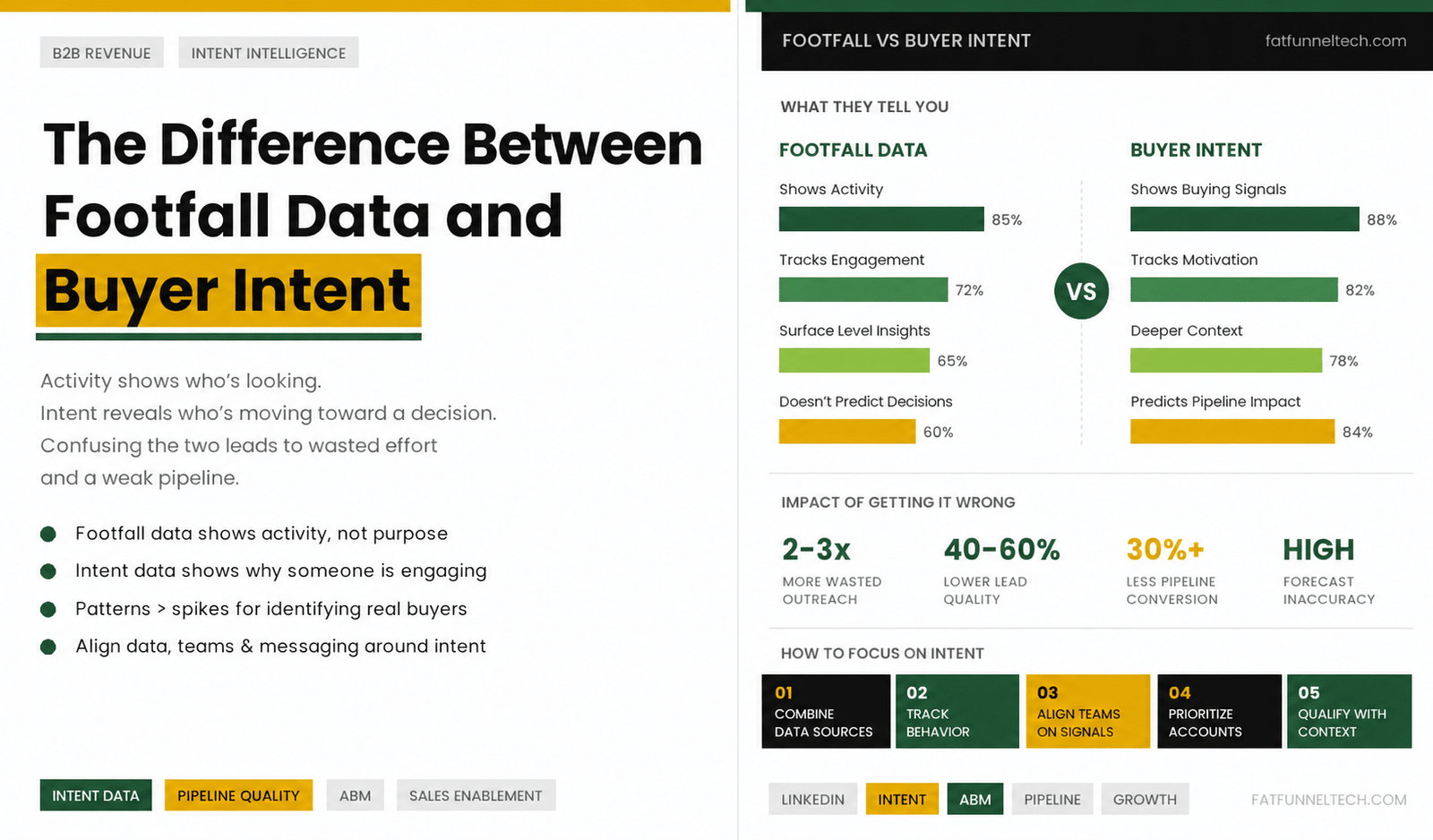
Most teams confuse footfall data with buyer intent.
And that confusion leads to wasted effort.
What Footfall Data Actually Tells You
Footfall data is simple.
It shows activity.
This includes:
- Website visits
- Page views
- Time spent on site
- Content downloads
It answers one question:
“Who is interacting with us?”
That’s useful. But incomplete.
Because interaction does not equal intent.
A visitor could be:
- Researching the market
- Comparing options casually
- Or just exploring trends
Footfall data captures presence. Not purpose.
What Buyer Intent Actually Means
Buyer intent goes deeper.
It focuses on why someone is engaging.
It looks at signals like:
- Repeated research on a specific solution
- Searches around competitors
- Engagement across multiple channels
- Interest in pricing, integration or implementation
It answers a different question:
“Who is actively moving toward a buying decision?”
That distinction changes everything.
Why This Difference Matters
When teams treat footfall as intent, problems start.
1. Sales engages too early
A spike in website traffic triggers outreach.
Sales reaches out expecting interest.
The buyer is not ready.
The conversation goes nowhere.
2. Lead quality gets inflated
High traffic creates a sense of success.
Marketing reports strong numbers.
But pipeline tells a different story.
Because most of that traffic is low intent.
3. Messaging misses the mark
If you don’t understand intent, you can’t match the message.
Early-stage visitors need education.
Late-stage buyers need clarity and confidence.
When both get the same message, neither converts.
4. Pipeline becomes unpredictable
Without intent clarity, forecasting breaks.
You don’t know:
- Which accounts are serious
- Which ones are just browsing
- Which ones will convert
So pipeline looks full. But lacks direction.
Why This Problem Is Common in B2B
In industries like Cloud, ERP, ConTech or CRM, buying cycles are long.
Multiple stakeholders are involved.
Research happens long before decisions.
That means:
A lot of activity happens before real intent appears.
If you rely only on footfall data, you stay stuck at the surface.
What High-Intent Actually Looks Like
Intent is not a single signal. It’s a pattern.
You’ll often see:
- Consistent engagement over time
- Visits to product or solution pages
- Searches related to switching or implementation
- Multiple stakeholders interacting with your brand
This behavior shows movement.
Not just curiosity.
How to Stop Confusing Activity with Intent
1. Combine data sources
Footfall data shows activity.
Intent data adds context.
Together, they give a clearer picture.
Relying on one alone creates blind spots.
2. Track behavior, not just visits
Instead of counting clicks, look for patterns.
- Are they returning?
- Are they going deeper into product content?
- Are multiple people from the same account engaging?
This is where real insight comes from.
3. Align marketing and sales on intent signals
Marketing might see engagement.
Sales needs readiness.
Both teams should agree on:
- What qualifies as early interest
- What indicates buying intent
Without this, leads get pushed too early.
4. Prioritize accounts, not individuals
Intent often shows up at the account level.
One person visiting a page means little.
Multiple stakeholders showing interest means something.
This is where ABM becomes critical.
5. Use qualification frameworks properly
Frameworks like BANT help separate:
- Interest
- From actual opportunity
But they only work if applied with context.
Not every engaged lead qualifies.
The Real Role of Footfall Data
Footfall data is not useless.
It plays an important role.
It helps you:
- Measure awareness
- Understand content performance
- Identify early-stage interest
But it should not drive sales decisions on its own.
Final Thought
Footfall data tells you who is looking.
Buyer intent tells you who is moving.
Confusing the two leads to:
- Premature outreach
- Poor lead quality
- Weak pipeline conversion
The goal is not to reduce activity.
It’s to understand it better.
Because in B2B, especially in complex sales, not every visitor matters.
Only the ones moving toward a decision do.
Leave a Reply