

Cloud marketing looks busy.
Campaigns are running
Leads are coming in
Dashboards are full
On paper it feels like growth
But when you look at pipeline something feels off
Deals are limited
Conversion is low
Sales keeps asking for better leads
This is where a hard question comes in
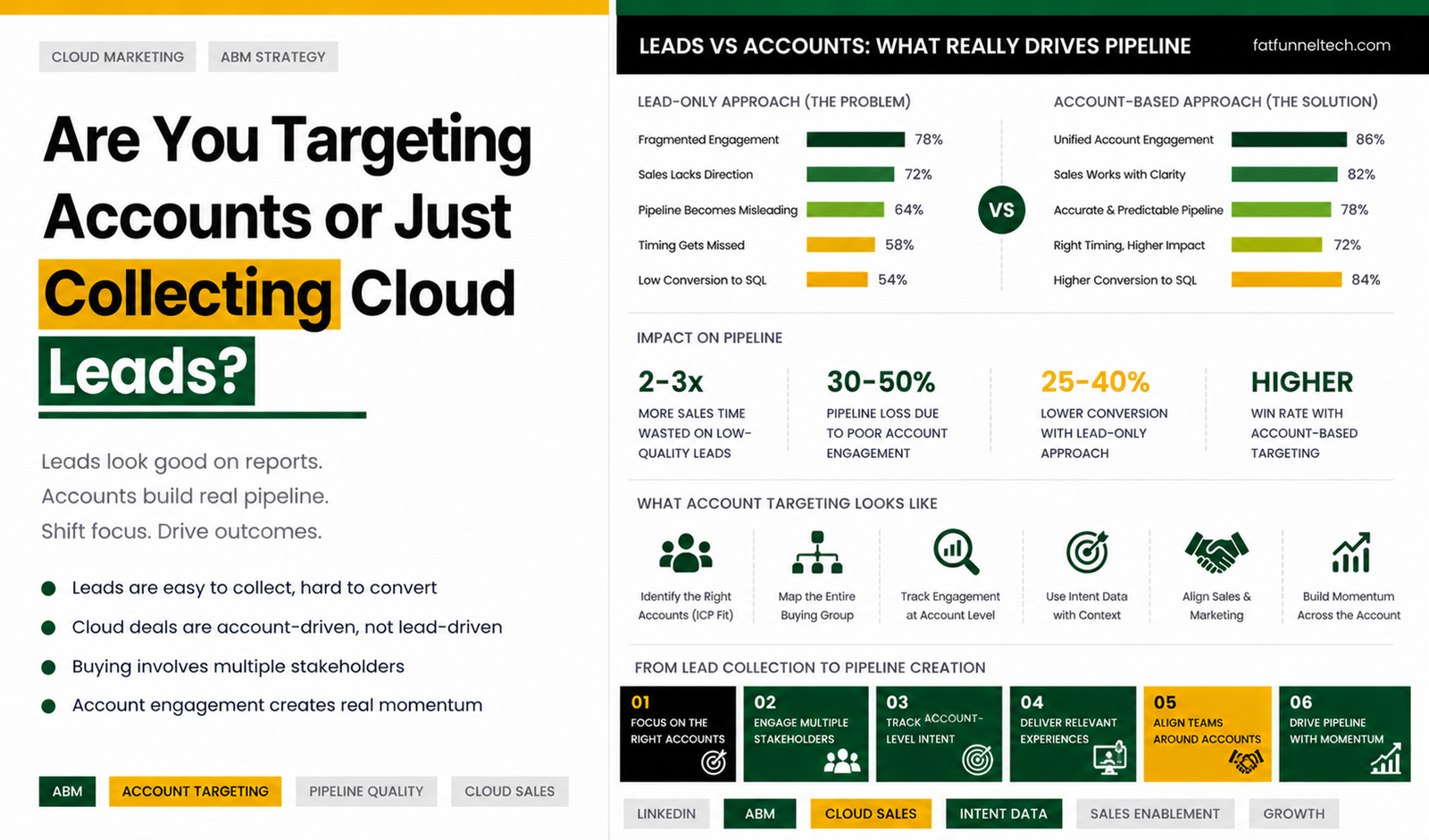
Are you really targeting accounts
Or just collecting cloud leads
The Comfort of Lead Volume
Leads are easy to measure
More form fills
More downloads
More webinar signups
It creates a sense of progress
Teams feel productive
Reports look strong
But volume hides a deeper issue
Most of these leads are isolated
They represent individuals
Not buying decisions
And cloud deals are never driven by one person
What Account Targeting Actually Means
Account targeting is different
It is not about how many people engage
It is about which companies are moving
It focuses on
Multiple stakeholders
Business context
Buying readiness
Instead of asking who filled a form
It asks which account is preparing to act
That shift changes everything
Why Collecting Leads Does Not Build Pipeline
1 Leads are disconnected
One person from a company downloads content
Another attends a webinar
Another visits your site
Individually these signals look small
Together they may indicate intent
But if you treat them separately you miss the pattern
2 Sales cannot act on isolated data
Sales needs context
They need to know
Why this company is engaging
What problem they are facing
Who else is involved
Without this they are reaching out blind
And conversations stay shallow
3 Timing gets misread
A lead engages today
Marketing passes it immediately
Sales reaches out
The buyer is not ready
Because engagement happened in isolation
Not as part of a buying process
4 Buying groups are ignored
Cloud decisions involve
IT
Security
Finance
Leadership
If you only engage one contact you are not in the deal
You are just part of their research
The Illusion of Progress
Lead generation creates activity
Account targeting creates direction
When teams focus only on leads
They see
More engagement
More data
More movement
But not more revenue
Because activity without alignment does not convert
What Real Account Targeting Looks Like
1 You track engagement at the account level
Not just who engaged
But how many people from the same company are active
Patterns start to appear
2 You identify buying signals across stakeholders
When multiple roles show interest
Intent becomes stronger
This is where real opportunities begin
3 You connect signals with business context
Engagement alone is not enough
You look at
Company growth
Technology changes
Operational challenges
This adds meaning to activity
4 You align sales and marketing around accounts
Marketing identifies movement
Sales builds relationships
Both teams focus on the same accounts
Not separate leads
Where Most Cloud Teams Get Stuck
They invest in lead generation
But not in interpretation
They capture data
But do not connect it
They generate activity
But do not translate it into action
So they keep collecting leads
While missing opportunities
The Role of Intent Data
Intent data helps bridge this gap
It shows
Which accounts are researching
When interest increases
How engagement evolves
But its value depends on how you use it
If you apply it at a lead level it stays fragmented
If you apply it at an account level it becomes actionable
The Shift That Changes Everything
From
Lead-centric thinking
Contact-level engagement
Volume-based success
To
Account-centric strategy
Buying group engagement
Pipeline-driven outcomes
This is not a small change
It is a different way of working
The Real Question
You don’t need more leads
You need clarity
Which accounts matter
Which ones are moving
Which ones are ready
Because in cloud sales
Deals do not come from individuals
They come from aligned accounts
Final Thought
Collecting leads feels like progress
Targeting accounts creates results
If your pipeline is not growing despite high activity
The issue is not effort
It is focus
Because the teams that win are not the ones with the most leads
They are the ones who know which accounts to act on
Leave a Reply