

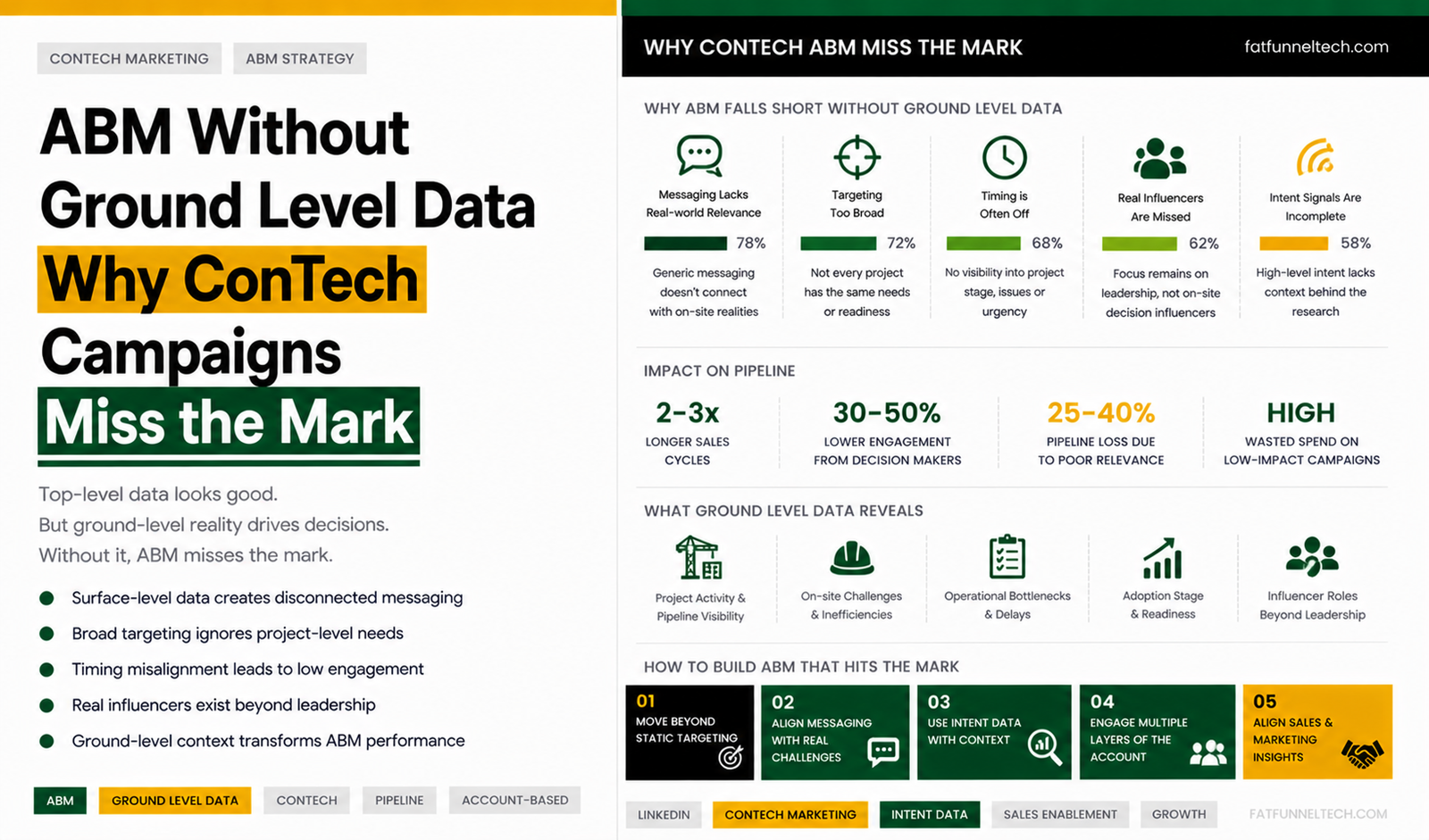
ABM sounds like the perfect strategy for ConTech
You define target accounts
You personalize outreach
You focus on high value deals
Everything looks structured
But results often tell a different story
Low response rates
Weak engagement from decision makers
Deals that never move forward
The problem is not ABM
It is the lack of ground level data
The Surface Level Problem
Most ConTech ABM campaigns rely on top level inputs
Industry
Company size
Job titles
This helps you identify who to target
But it does not tell you what is actually happening on the ground
And in construction that gap is critical
Why Ground Level Data Matters in ConTech
Construction is not a boardroom driven industry alone
Decisions are shaped by what happens on site
Project delays
Operational inefficiencies
Technology adoption challenges
If your campaign does not reflect these realities it feels disconnected
And when messaging feels disconnected buyers do not engage
Where ABM Campaigns Miss the Mark
1. Messaging lacks real world relevance
Most campaigns talk about
Efficiency
Automation
Scalability
But buyers think in terms of
Site delays
Cost overruns
Project timelines
Without ground level insight your message stays generic
2. Targeting is too broad
You may target a construction company
But not every project within that company has the same needs
Some are exploring new tools
Some are mid project
Some are not ready at all
Without ground level data you cannot differentiate
3. Timing is completely off
A company might fit your ICP perfectly
But if they are not facing a problem right now
They will not engage
Ground level signals help identify
When a project is starting
When issues are rising
When change becomes urgent
Without this timing is guesswork
4. You miss the real influencers
In ConTech decisions are influenced by
Site managers
Project heads
Operations teams
Not just leadership
If your campaign ignores these roles
You miss the people shaping the decision
5. Intent signals are incomplete
Intent data at a high level shows research activity
But ground level data shows
Why that activity exists
Without that context signals remain weak
The Gap Between Strategy and Reality
ABM strategy looks strong on paper
Target accounts are defined
Campaigns are personalized
Channels are aligned
But execution fails because it is disconnected from reality
Construction decisions are practical
They are driven by real problems
Not theoretical benefits
What Ground Level Data Actually Looks Like
It is not just firmographic or intent data
It includes
Project activity
Operational challenges
Site level inefficiencies
Adoption barriers
This data connects your campaign to real situations
How to Fix ABM in ConTech
1. Move beyond static targeting
Do not rely only on company level data
Understand what is happening within projects
This improves relevance
2. Align messaging with real challenges
Instead of broad benefits focus on
Specific problems
Practical outcomes
Operational impact
This makes communication relatable
3. Use intent data with context
Intent data shows interest
Ground level data explains it
Together they create clarity
4. Engage multiple layers of the account
Do not focus only on leadership
Include
Project teams
Operations
On ground influencers
This builds stronger engagement
5. Align sales and marketing insights
Marketing identifies signals
Sales validates them through conversations
Both need to share insights
Without this alignment campaigns stay disconnected
The Real Shift
From
High level targeting
Generic personalization
Surface level signals
To
Context driven targeting
Problem based messaging
Ground level understanding
This is what makes ABM work in ConTech
The Real Problem
ConTech campaigns do not fail because of poor strategy
They fail because they ignore reality
Without ground level data
Even the best campaigns feel irrelevant
And when relevance is missing engagement drops
Final Thought
In construction tech what happens on the ground defines what happens in the deal
If your ABM strategy does not reflect ground level reality
It will always miss the mark
Because buyers do not respond to generic messaging
They respond to solutions that understand their real challenges
Leave a Reply