

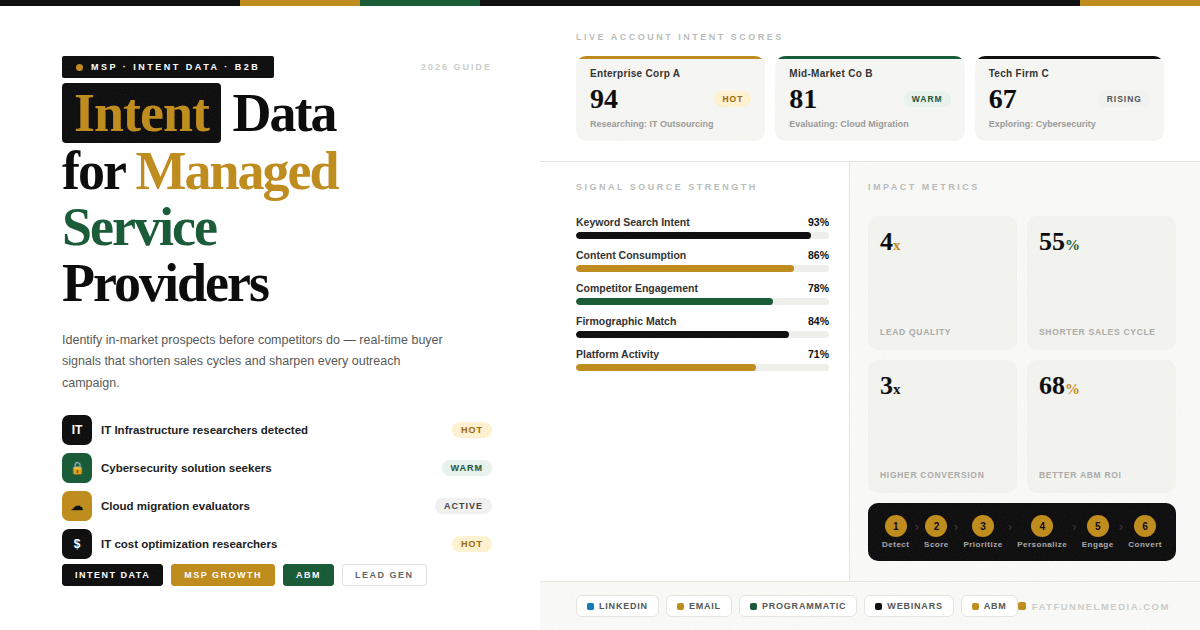
In today’s competitive B2B technology landscape, Managed Service Providers are constantly seeking smarter ways to identify, engage, and convert high-value prospects. Traditional lead generation methods often lack timing and relevance, resulting in missed opportunities and longer sales cycles.
Intent data is transforming how MSPs approach demand generation by providing real-time insights into buyer behavior. It enables providers to identify prospects who are actively researching solutions, allowing for more targeted and timely engagement.
What is Intent Data in the MSP Context
Intent data refers to behavioral signals that indicate a company’s interest in specific products or services. These signals are collected from various online activities such as content consumption, keyword searches, and engagement with industry platforms.
For Managed Service Providers, intent data helps uncover:
- Companies researching IT infrastructure solutions
- Businesses exploring cybersecurity services
- Organizations looking for cloud migration support
This insight allows MSPs to focus on prospects who are already in the buying journey.
Why Intent Data Matters for MSPs
Managed services often involve complex offerings and long decision cycles. Reaching the right audience at the right time is critical.
Key benefits of intent data include:
- Improved lead quality
- Shorter sales cycles
- Better alignment between sales and marketing
- Higher conversion rates
By prioritizing in-market accounts, MSPs can allocate resources more efficiently.
Identifying High-Intent Accounts
The first step is to identify accounts showing strong buying signals. Not all intent data is equal, so MSPs must focus on relevant and actionable insights.
Indicators of high intent:
- Frequent searches related to IT outsourcing or managed services
- Engagement with competitor content
- Increased activity around specific service categories
Combining intent data with firmographic data ensures better targeting.
Align Sales and Marketing Around Intent Signals
Intent data is most effective when both sales and marketing teams work together.
This includes:
- Sharing real-time account insights
- Prioritizing outreach based on intent scores
- Coordinating messaging and campaigns
Alignment ensures that high-intent prospects receive timely and consistent communication.
Personalize Outreach Based on Buyer Intent
Generic outreach often fails to capture attention. Intent data allows MSPs to tailor their messaging based on what prospects are actively researching.
Examples:
- Offering cybersecurity solutions to companies exploring data protection
- Sharing cloud migration case studies with organizations evaluating cloud adoption
- Providing cost optimization insights to businesses reviewing IT expenses
Personalization increases engagement and builds trust.
Integrate Intent Data into ABM Strategies
Intent data and Account-Based Marketing work seamlessly together. MSPs can use intent signals to refine their ABM campaigns and focus on accounts that are ready to engage.
Benefits include:
- Better account prioritization
- More relevant campaign messaging
- Increased campaign ROI
This combination creates a highly targeted and efficient growth strategy.
Leverage Multi-Channel Engagement
Once high-intent accounts are identified, MSPs should engage them across multiple channels.
Effective channels include:
- Email campaigns tailored to intent signals
- LinkedIn outreach targeting decision-makers
- Programmatic advertising for account-specific visibility
- Webinars addressing specific pain points
A multi-channel approach ensures consistent engagement throughout the buyer journey.
Measure the Impact of Intent-Driven Campaigns
Tracking performance is essential to understand the effectiveness of intent data strategies.
Key metrics to monitor:
- Engagement rates from target accounts
- Conversion rates of high-intent leads
- Pipeline contribution
- Revenue generated
These insights help refine targeting and improve future campaigns.
Overcome Common Challenges
While intent data offers significant advantages, MSPs may face challenges such as data accuracy and integration.
To overcome these:
- Use reliable intent data providers
- Combine multiple data sources for better accuracy
- Integrate intent data with CRM and marketing tools
A structured approach ensures maximum value from intent insights.
Final Thoughts
Intent data is redefining how Managed Service Providers approach B2B lead generation and client acquisition. By identifying in-market prospects and delivering highly relevant messaging, MSPs can improve efficiency and drive better outcomes.
In a landscape where timing and relevance are critical, leveraging intent data enables MSPs to stay ahead of competitors and build stronger, more meaningful client relationships.

Leave a Reply