

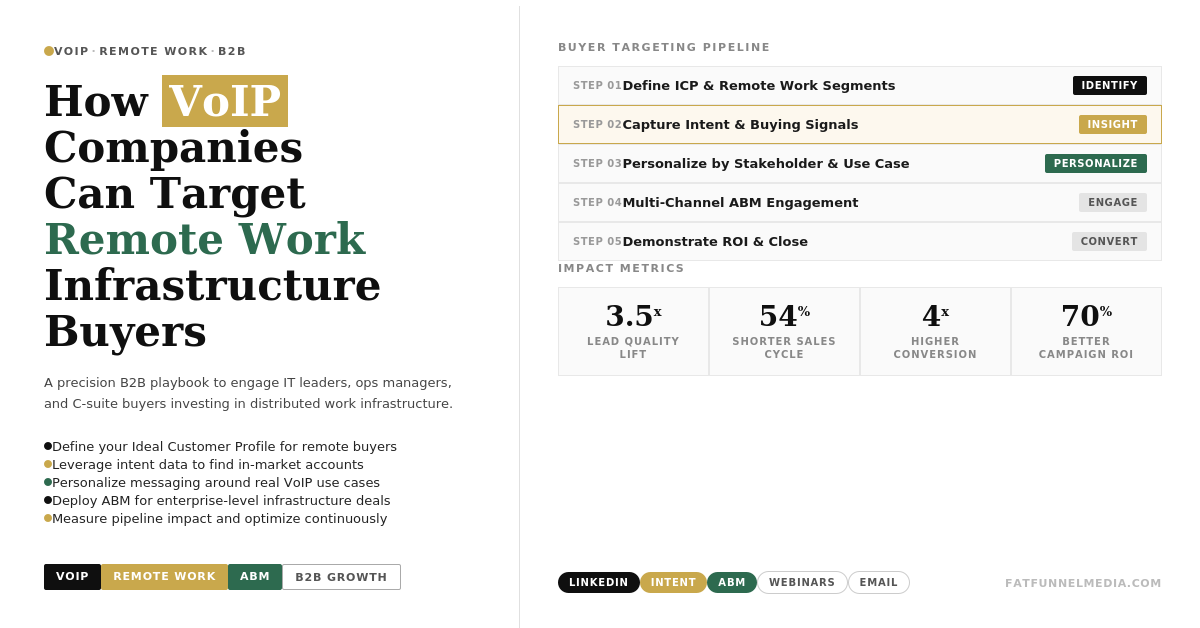
The rise of remote and hybrid work has transformed how businesses communicate, collaborate, and operate. As organizations continue to invest in distributed work environments, VoIP companies have a significant opportunity to position themselves as essential enablers of modern communication infrastructure.
However, targeting remote work infrastructure buyers requires more than generic messaging. It demands a focused B2B strategy that aligns with evolving business needs, multiple stakeholders, and long-term scalability.
The Shift Towards Remote Work Infrastructure
Businesses are no longer viewing remote work as a temporary solution. It has become a long-term operational model across industries.
This shift has increased demand for:
- Cloud-based communication systems
- Scalable and secure VoIP solutions
- Integration with collaboration tools
- Reliable global connectivity
VoIP companies must align their offerings with these evolving requirements.
Understand the Remote Work Buyer Persona
Remote work infrastructure decisions are typically made by multiple stakeholders.
Key decision-makers include:
- IT leaders and infrastructure heads
- Operations managers
- HR and workforce leaders
- C-level executives
Each stakeholder has different priorities such as cost efficiency, security, scalability, and employee experience. Understanding these perspectives is critical for effective targeting.
Define a Clear Ideal Customer Profile
To generate high-quality leads, VoIP companies must clearly define their Ideal Customer Profile.
This can include:
- Companies with distributed or hybrid teams
- Organizations scaling across multiple locations
- Businesses transitioning from traditional telephony systems
- Enterprises investing in digital transformation
A well-defined ICP ensures focused and efficient marketing efforts.
Leverage Intent Data to Identify In-Market Buyers
Intent data plays a crucial role in identifying companies actively researching remote work solutions.
VoIP companies can track signals such as:
- Searches related to remote communication tools
- Engagement with cloud telephony content
- Research on collaboration platforms
Targeting high-intent accounts increases the chances of conversion.
Personalize Messaging Based on Use Cases
Generic messaging does not resonate with remote work buyers. VoIP companies must tailor their communication based on specific use cases.
Examples include:
- Seamless communication for distributed teams
- Cost savings compared to traditional systems
- Integration with tools like CRM and collaboration platforms
- Enhanced security and compliance
Personalized messaging improves engagement and builds trust.
Use Account-Based Marketing for Enterprise Clients
For enterprise-level remote work buyers, Account-Based Marketing is highly effective.
Strategies include:
- Targeting specific organizations with personalized campaigns
- Engaging multiple stakeholders within accounts
- Creating tailored content and demos
ABM helps VoIP companies win high-value deals.
Build Thought Leadership Around Remote Work
Establishing authority in the remote work space can significantly enhance brand positioning.
VoIP companies should:
- Publish insights on remote work trends
- Share best practices for communication infrastructure
- Host webinars and virtual events
Thought leadership builds credibility and attracts decision-makers.
Leverage Multi-Channel Engagement
Remote work buyers interact across multiple digital channels. A strong strategy ensures consistent presence.
Effective channels include:
- LinkedIn for B2B outreach
- Email campaigns for nurturing leads
- Webinars focused on remote work challenges
- Paid campaigns targeting high-intent keywords
A multi-channel approach ensures continuous engagement.
Showcase ROI and Business Impact
VoIP investments must be justified with clear business outcomes.
Companies should highlight:
- Cost reduction compared to legacy systems
- Improved team productivity
- Scalability for growing teams
- Enhanced communication reliability
Demonstrating value accelerates decision-making.
Align Sales and Marketing Teams
Successful targeting requires strong collaboration between sales and marketing.
Best practices include:
- Sharing account insights and intent data
- Coordinating outreach strategies
- Maintaining consistent messaging
Alignment ensures a seamless buyer experience.
Measure and Optimize Campaign Performance
Continuous improvement is essential for long-term success.
Key metrics to track:
- Engagement from target accounts
- Conversion rates
- Pipeline growth
- Revenue contribution
Data-driven optimization helps refine strategies and improve ROI.
Final Thoughts
VoIP companies have a unique opportunity to capitalize on the growing demand for remote work infrastructure. By leveraging intent data, personalization, and targeted B2B strategies, they can effectively engage high-value buyers and drive sustainable growth.
In a market where communication is mission-critical, the ability to connect with the right audience at the right time can define long-term success.

Leave a Reply