

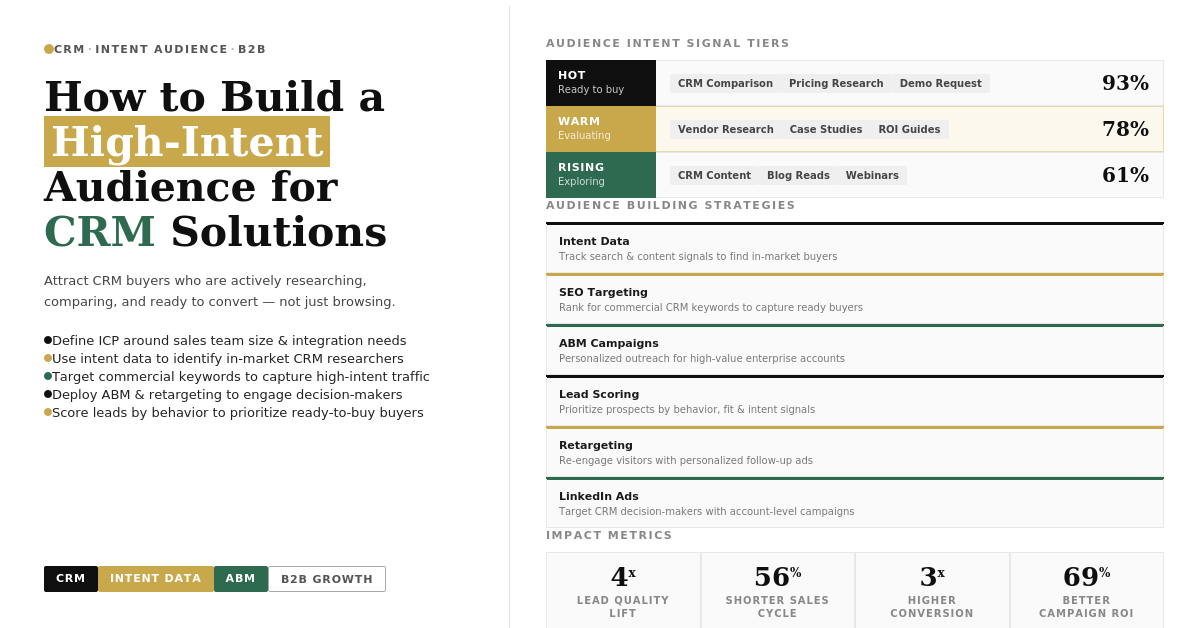
In today’s crowded CRM market, generating traffic is no longer the goal. The real challenge is building a high-intent audience that is actively searching for solutions and ready to engage. With long sales cycles and multiple decision-makers involved, CRM vendors must focus on attracting prospects who show clear buying signals.
A high-intent audience not only improves conversion rates but also reduces acquisition costs and accelerates revenue growth.
Understanding What High-Intent Means in CRM
High-intent prospects are those who are actively researching CRM solutions, comparing vendors, or looking to upgrade their existing systems.
These buyers typically:
- Search for CRM-related keywords
- Engage with product-focused content
- Download comparison guides or case studies
- Interact with competitor platforms
Identifying and targeting these signals is key to building a strong pipeline.
Define a Clear Ideal Customer Profile
Building a high-intent audience starts with clarity on who to target.
CRM vendors should define their Ideal Customer Profile based on:
- Industry and business model
- Company size and sales team structure
- Existing tools and integration needs
- Growth stage and revenue goals
A focused ICP ensures that marketing efforts attract relevant prospects.
Leverage Intent Data for Precision Targeting
Intent data is one of the most effective ways to identify high-intent audiences.
CRM companies can track:
- Search behavior related to CRM implementation or switching
- Engagement with industry content
- Interest in sales automation and pipeline management
Using intent signals helps prioritize prospects who are already in the buying journey.
Create Content for High-Intent Stages
Content plays a critical role in attracting and nurturing high-intent prospects.
Focus on content that supports decision-making, such as:
- Product comparison guides
- Case studies with measurable outcomes
- ROI-focused whitepapers
- Implementation and onboarding guides
This type of content appeals to prospects closer to conversion.
Optimize SEO for Commercial Keywords
SEO is a powerful channel for capturing high-intent traffic.
CRM vendors should target:
- Keywords like “best CRM software”
- “CRM for small business” or “enterprise CRM solutions”
- “CRM pricing” and “CRM comparison”
Ranking for commercial and transactional keywords ensures visibility among ready-to-buy prospects.
Use Account-Based Marketing for Targeted Engagement
For enterprise clients, Account-Based Marketing is essential to build a high-intent audience.
Strategies include:
- Targeting specific high-value accounts
- Personalizing outreach and campaigns
- Engaging multiple stakeholders within organizations
ABM ensures deeper engagement with qualified prospects.
Run Retargeting Campaigns to Capture Interest
Not all high-intent prospects convert on their first visit. Retargeting helps bring them back into the funnel.
Effective approaches:
- Display ads targeting website visitors
- Personalized messaging based on user behavior
- Follow-up campaigns highlighting key benefits
Retargeting keeps your brand top of mind.
Leverage LinkedIn for B2B Targeting
LinkedIn is a key platform for reaching CRM decision-makers.
CRM companies can:
- Target sales leaders and executives
- Share high-value content
- Run account-specific ad campaigns
This helps attract and engage high-intent B2B audiences.
Align Sales and Marketing Teams
Building a high-intent audience requires collaboration between sales and marketing.
Best practices:
- Sharing insights on lead behavior
- Prioritizing high-intent accounts
- Coordinating outreach strategies
Alignment ensures timely and relevant engagement.
Use Lead Scoring to Identify Ready Buyers
Lead scoring helps differentiate between casual visitors and high-intent prospects.
Factors to consider:
- Website activity and page visits
- Content downloads
- Email engagement
- Intent data signals
This ensures sales teams focus on the most promising leads.
Deliver Personalized Experiences
High-intent buyers expect personalized engagement.
Examples include:
- Customized landing pages
- Tailored product demos
- Role-specific messaging
Personalization builds trust and accelerates decision-making.
Measure and Optimize Continuously
Building a high-intent audience is an ongoing process.
Key metrics to track:
- Conversion rates
- Cost per qualified lead
- Engagement levels
- Pipeline contribution
Data-driven insights help refine strategies and improve results.
Final Thoughts
Building a high-intent audience for CRM solutions requires a strategic approach that combines intent data, targeted content, and personalized engagement. By focusing on prospects who are actively in the buying journey, CRM vendors can improve lead quality, shorten sales cycles, and drive sustainable growth.
In a competitive market, the ability to attract and convert high-intent buyers can be the key differentiator for long-term success.

Leave a Reply