

In today’s competitive retail technology landscape, EPOS providers are no longer just selling billing systems. They are offering integrated solutions that impact inventory, customer experience, and business intelligence. However, when it comes to targeting large retail chains, traditional marketing approaches often fail to deliver meaningful results.
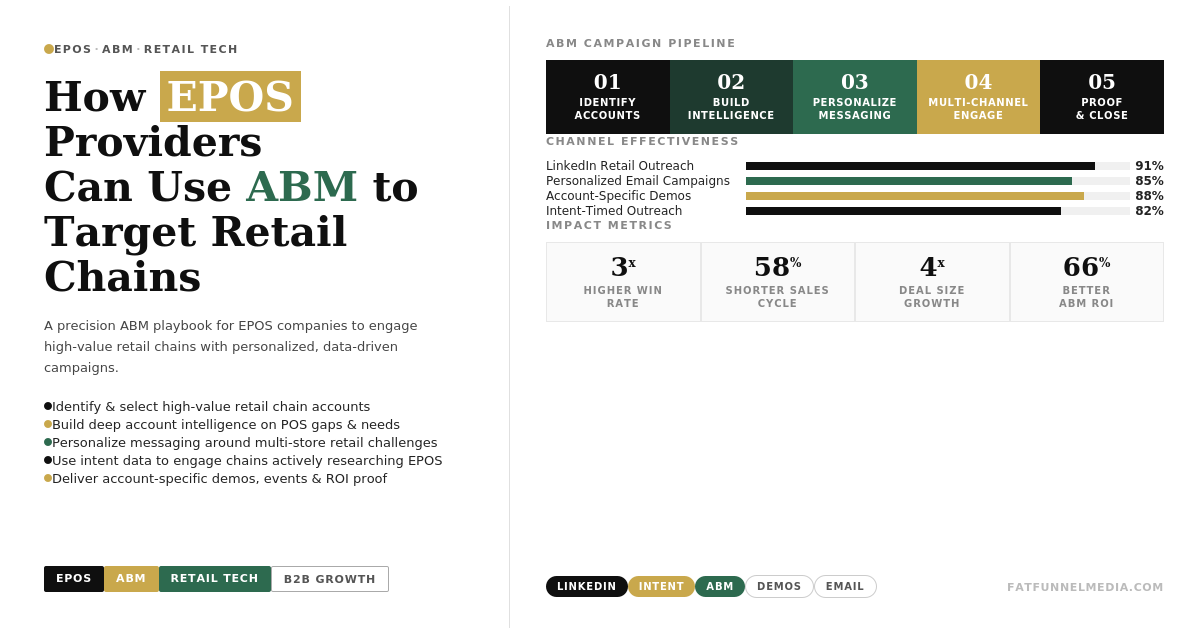
Account-Based Marketing provides EPOS companies with a strategic approach to engage high-value retail chains through personalized and targeted campaigns. Instead of focusing on volume, ABM enables precision, relevance, and stronger deal conversion.
Why Retail Chains Require a Targeted Approach
Retail chains operate at scale with multiple locations, complex operations, and diverse customer bases. Their buying decisions are influenced by multiple stakeholders including operations heads, IT teams, and senior leadership.
Key challenges include:
- Long decision-making cycles
- Need for scalable and integrated solutions
- High expectations around ROI and efficiency
- Multiple vendor evaluations
ABM helps EPOS providers address these challenges with a focused strategy.
Identify High-Value Retail Accounts
The foundation of ABM lies in selecting the right accounts. EPOS providers should focus on retail chains that align with their solution capabilities.
Key criteria:
- Number of store locations
- Industry segment such as fashion, grocery, or electronics
- Existing technology infrastructure
- Expansion and growth plans
Targeting the right accounts increases the likelihood of conversion.
Build Deep Account Insights
Understanding each retail chain in detail is critical for successful ABM campaigns.
EPOS providers should analyze:
- Current POS systems and limitations
- Inventory and supply chain challenges
- Customer experience gaps
- Key decision-makers and influencers
These insights help create highly relevant messaging.
Personalize Messaging for Retail Needs
Generic messaging does not resonate with enterprise retail buyers. EPOS companies must tailor their communication to address specific operational challenges.
Examples:
- Real-time inventory tracking for multi-store operations
- Centralized reporting for better decision-making
- Faster checkout experiences to improve customer satisfaction
- Integration with eCommerce platforms
Personalization increases engagement and builds trust.
Use Multi-Channel ABM Campaigns
Retail decision-makers engage across multiple platforms. A strong ABM strategy ensures consistent presence across channels.
Effective channels include:
- LinkedIn outreach targeting retail executives
- Email campaigns with personalized insights
- Account-specific digital advertising
- Webinars focused on retail technology trends
A coordinated approach improves visibility and engagement.
Align Sales and Marketing Teams
ABM success depends on collaboration between sales and marketing teams.
Best practices:
- Shared account intelligence and data
- Coordinated outreach strategies
- Regular feedback loops
Alignment ensures a seamless and consistent experience for target accounts.
Showcase Value with Retail-Focused Proof
Retail chains require strong evidence before adopting new technology. EPOS providers must demonstrate clear business impact.
This can be done through:
- Case studies with measurable outcomes
- ROI calculations for cost savings
- Success stories from similar retail segments
- Live product demonstrations
Proof-driven engagement builds confidence and accelerates decisions.
Leverage Intent Data for Better Timing
Timing plays a crucial role in ABM success. Intent data helps identify retail chains actively researching EPOS solutions.
Key signals include:
- Searches related to POS upgrades
- Engagement with retail technology content
- Interest in omnichannel solutions
Engaging at the right time increases conversion probability.
Create Account-Specific Experiences
Delivering a personalized experience can significantly improve engagement.
Examples include:
- Customized landing pages for target accounts
- Tailored presentations and demos
- Exclusive events or roundtables for retail leaders
These experiences create a premium perception and strengthen relationships.
Measure and Optimize ABM Campaigns
Continuous optimization is essential for ABM success.
Key metrics to track:
- Account engagement levels
- Pipeline growth from target accounts
- Conversion rates
- Deal size and revenue impact
Data-driven insights help refine strategies over time.
Final Thoughts
Account-Based Marketing offers EPOS providers a powerful way to target and win retail chains. By focusing on personalization, strategic alignment, and data-driven engagement, companies can build meaningful relationships with high-value clients.
In a retail environment driven by efficiency and customer experience, EPOS providers that adopt ABM can position themselves as trusted partners and drive long-term growth.

Leave a Reply