

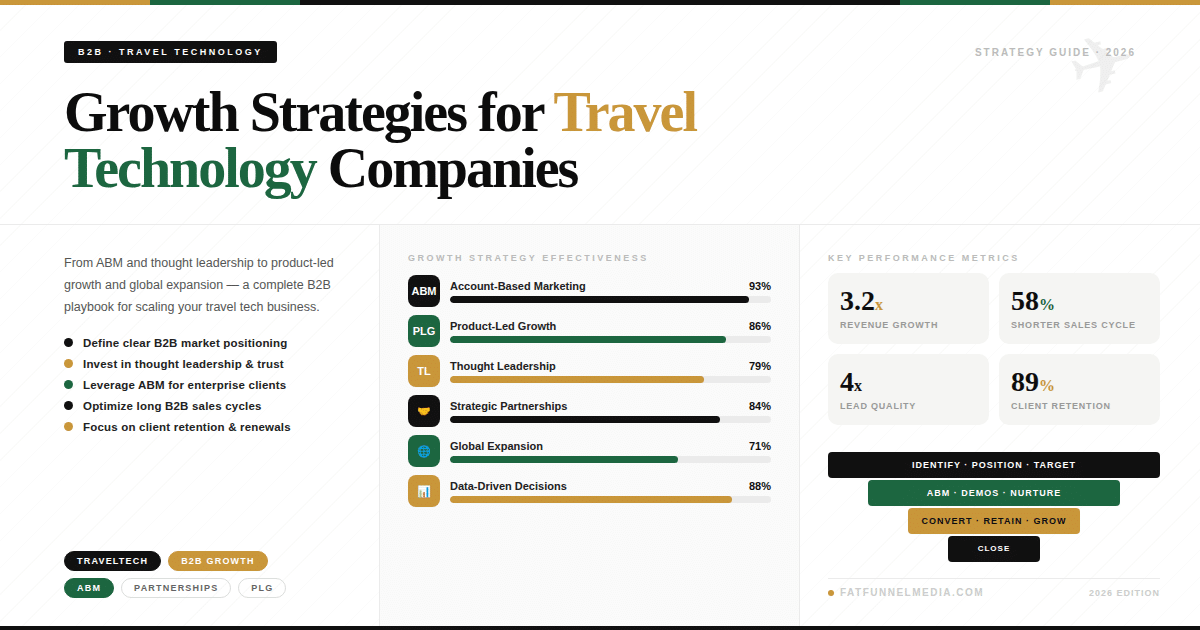
In an increasingly competitive and experience-driven market, travel technology companies are under pressure to scale faster while delivering measurable value to partners, clients, and end users. From SaaS platforms to booking engines and AI-driven travel solutions, growth today is not just about innovation. It is about strategic execution across channels, partnerships, and customer journeys.
For B2B travel technology providers, the challenge lies in building credibility, shortening sales cycles, and creating solutions that align with the evolving needs of travel businesses worldwide.
The Shift in the Travel Tech Landscape
The global travel ecosystem has undergone a significant transformation. Digital adoption has accelerated, and businesses across airlines, hospitality, and travel agencies are actively seeking technology partners that can improve efficiency and enhance customer experience.
This shift has created opportunities for travel tech companies to position themselves as strategic enablers rather than just service providers.
Define a Clear B2B Positioning
For sustainable growth, travel technology companies must clearly define their market positioning.
This includes:
- Identifying target segments such as OTAs, DMCs, or corporate travel firms
- Highlighting core value propositions like automation, scalability, or cost optimization
- Differentiating from competitors through niche expertise
A strong positioning helps attract the right clients and builds long-term brand authority.
Invest in Thought Leadership
In the B2B space, trust is a key driver of decision-making. Travel tech companies can accelerate growth by establishing themselves as industry thought leaders.
Effective approaches include:
- Publishing insight-driven blogs and reports
- Sharing market trends and data-backed analysis
- Hosting webinars and industry discussions
Thought leadership not only builds credibility but also attracts high-intent prospects.
Leverage Account-Based Marketing for Enterprise Growth
Enterprise clients in travel require tailored solutions and personalized engagement. Account-Based Marketing enables travel tech companies to target high-value accounts with precision.
Key strategies:
- Identify and prioritize enterprise travel businesses
- Create personalized outreach campaigns
- Engage multiple stakeholders within target organizations
This approach improves conversion rates and strengthens client relationships.
Build Strategic Industry Partnerships
Partnerships are a major growth lever in the travel technology ecosystem.
Travel tech companies should collaborate with:
- Airlines and hotel groups
- Global distribution systems
- Travel agencies and aggregators
- Payment and fintech providers
These alliances not only expand market reach but also enhance product capabilities and credibility.
Optimize the Sales Funnel for Long Cycles
B2B travel technology sales cycles are often long and complex. Companies must optimize their funnel to maintain engagement throughout the journey.
This can be achieved through:
- Lead nurturing campaigns
- Personalized demos and consultations
- Clear ROI communication
A well-structured funnel ensures that prospects move steadily toward conversion.
Focus on Product-Led Growth
Product experience plays a crucial role in driving adoption. Travel tech companies should prioritize usability, scalability, and integration capabilities.
Key areas of focus:
- Seamless onboarding processes
- API-first architecture for easy integration
- Real-time data and analytics capabilities
A strong product experience reduces friction and accelerates client acquisition.
Expand Through Global and Regional Markets
Growth opportunities in travel technology are not limited to a single geography. Emerging markets are rapidly adopting digital solutions.
To scale effectively, companies must:
- Localize offerings based on regional needs
- Adapt to local regulations and payment systems
- Build partnerships with regional players
Global expansion, when executed strategically, can significantly boost revenue streams.
Use Data to Drive Strategic Decisions
Data-driven decision-making is essential for sustainable growth. Travel tech companies should continuously analyze performance metrics to refine their strategies.
Important metrics include:
- Customer acquisition cost
- Conversion rates
- Client lifetime value
- Retention and churn rates
Insights from data help optimize both marketing and product strategies.
Prioritize Client Experience and Retention
In the B2B travel tech space, retention is as important as acquisition. Long-term growth depends on delivering consistent value to clients.
Focus on:
- Dedicated account management
- Ongoing support and training
- Regular product updates based on feedback
Strong client relationships lead to renewals, upselling opportunities, and referrals.
Final Thoughts
For travel technology companies, growth is no longer driven by product innovation alone. It requires a comprehensive strategy that integrates marketing, partnerships, product development, and customer experience.
By adopting a B2B-focused approach and aligning with industry demands, travel tech companies can position themselves as indispensable partners in a rapidly evolving global travel ecosystem.

Leave a Reply