

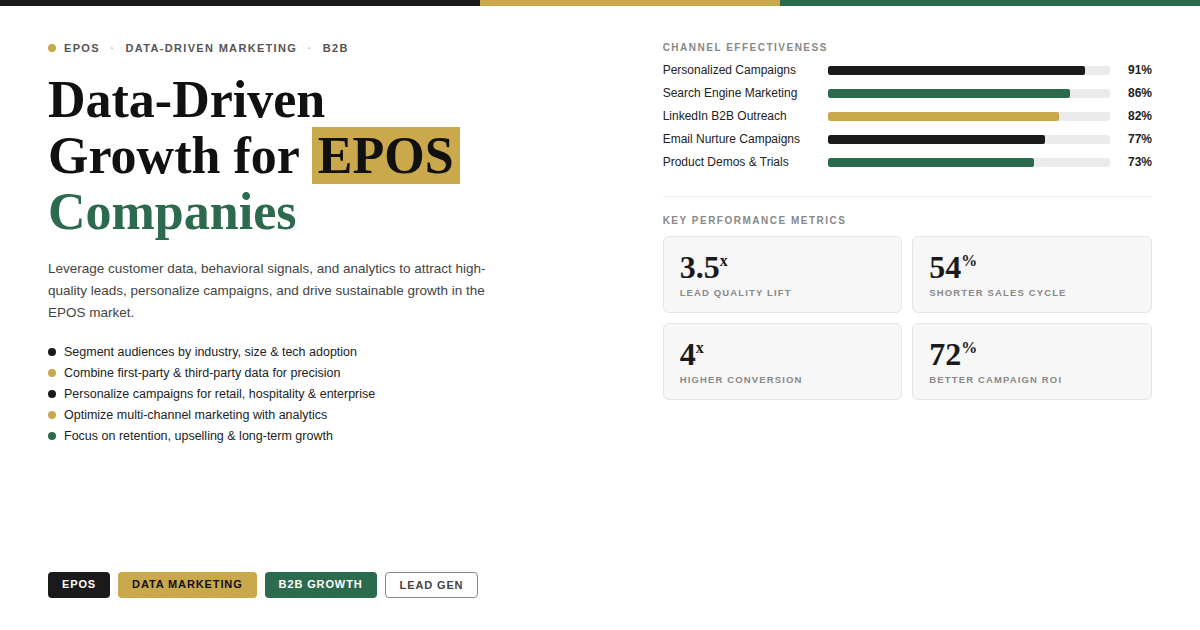
In an increasingly competitive retail and hospitality landscape, EPOS providers are under pressure to deliver not just technology but measurable business outcomes. From streamlining operations to enhancing customer experience, EPOS systems have become central to modern business infrastructure.
However, driving growth in this space requires more than product capabilities. Data-driven marketing is enabling EPOS companies to identify the right prospects, optimize campaigns, and convert high-value clients with precision.
The Changing EPOS Market Landscape
EPOS solutions are no longer limited to transaction processing. Today’s systems integrate with inventory, analytics, customer engagement, and payment solutions.
This evolution has expanded the buyer base across:
- Retail chains and independent stores
- Restaurants and hospitality businesses
- Multi-location enterprises
With increased competition, EPOS companies must adopt smarter growth strategies to stand out.
What is Data-Driven Marketing in EPOS
Data-driven marketing uses insights from customer data, behavioral signals, and analytics to guide marketing decisions.
For EPOS providers, this includes:
- Understanding buyer behavior across industries
- Tracking engagement across digital channels
- Using analytics to refine targeting and messaging
The goal is to replace guesswork with actionable insights.
Define and Segment Your Target Audience
Growth starts with clearly identifying and segmenting your audience.
EPOS companies should segment based on:
- Industry type such as retail or hospitality
- Business size and number of locations
- Technology adoption level
- Operational challenges
Segmentation allows for more relevant and personalized campaigns.
Leverage First-Party and Third-Party Data
Data is the backbone of effective marketing strategies. EPOS companies should combine multiple data sources to gain deeper insights.
Key data sources include:
- Website analytics and user behavior
- CRM and customer data
- Third-party intent data
- Industry trends and benchmarks
A unified data approach improves targeting accuracy.
Personalize Campaigns for Better Engagement
Personalization is critical in B2B decision-making. Data-driven insights allow EPOS companies to tailor messaging based on specific needs.
Examples:
- Highlighting inventory management for retail businesses
- Showcasing table management features for restaurants
- Promoting multi-location reporting for enterprises
Relevant messaging increases engagement and conversion rates.
Optimize Multi-Channel Marketing Efforts
EPOS buyers interact across multiple channels before making a decision. A strong strategy ensures consistent messaging across platforms.
Effective channels include:
- Search engine marketing for high-intent queries
- LinkedIn for B2B outreach
- Email campaigns for nurturing leads
- Retargeting ads for re-engagement
Data helps identify which channels deliver the best results.
Use Analytics to Improve Campaign Performance
Continuous optimization is essential for growth. EPOS companies should track and analyze campaign performance regularly.
Important metrics include:
- Cost per lead
- Conversion rates
- Customer acquisition cost
- Revenue generated
Insights from analytics help refine strategies and improve ROI.
Align Sales and Marketing Teams
Data-driven marketing is most effective when sales and marketing teams work together.
This includes:
- Sharing insights and lead data
- Coordinating outreach strategies
- Tracking account-level engagement
Alignment ensures a seamless experience for prospects.
Implement Product-Led Growth Strategies
Product experience plays a key role in driving adoption. EPOS companies can use data to improve onboarding and usability.
Strategies include:
- Offering free trials or demos
- Tracking user behavior within the product
- Optimizing features based on usage data
A strong product experience accelerates conversions.
Focus on Customer Retention and Upselling
Growth is not just about acquisition. Retention and expansion are equally important.
EPOS companies should:
- Analyze customer usage patterns
- Identify upsell opportunities
- Provide ongoing support and updates
Data-driven insights help strengthen long-term relationships.
Final Thoughts
Data-driven marketing is redefining growth strategies for EPOS companies. By leveraging insights, personalizing engagement, and optimizing campaigns, businesses can attract high-quality leads and drive sustainable growth.
In a market where precision and relevance matter, using data effectively provides a competitive advantage and positions EPOS providers as strategic partners for their clients.

Leave a Reply