

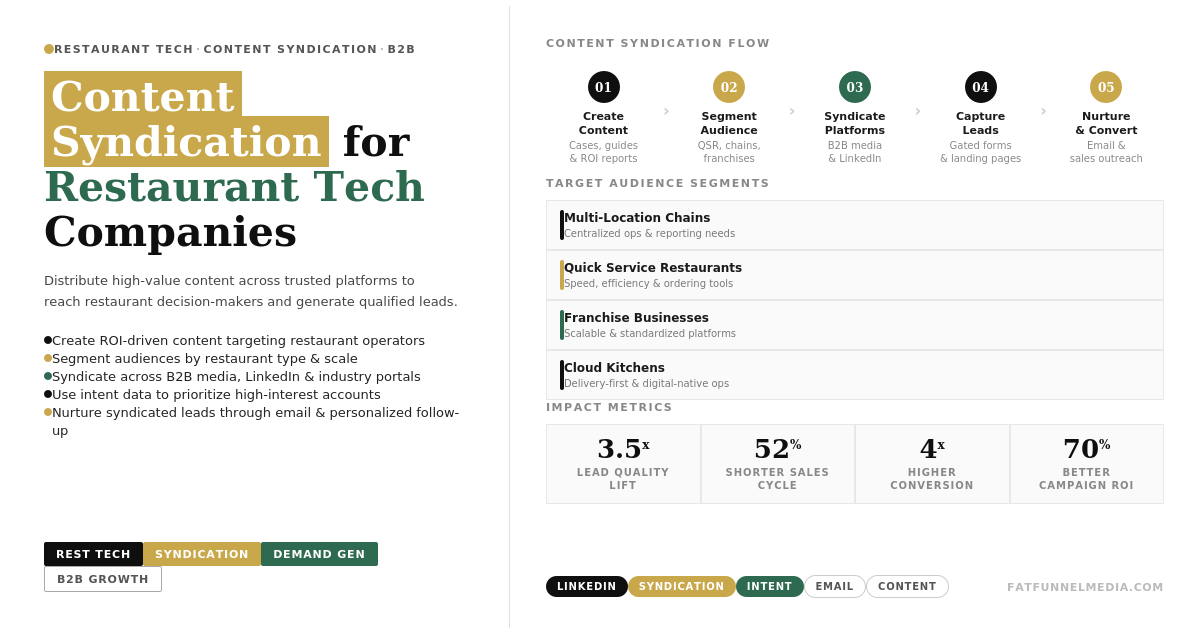
In a highly competitive hospitality technology market, restaurant tech companies are constantly looking for scalable ways to generate qualified leads and increase brand visibility. From POS systems to ordering platforms and customer engagement tools, reaching the right audience at the right time is critical.
Content syndication has emerged as a powerful B2B strategy that enables restaurant tech companies to distribute valuable content across trusted platforms and connect with high-intent buyers.
What is Content Syndication in Restaurant Tech
Content syndication involves distributing your existing content such as blogs, whitepapers, case studies, and reports through third-party platforms to reach a broader and more targeted audience.
For restaurant tech companies, this means placing content in front of:
- Restaurant owners and operators
- Multi-location chain decision-makers
- Hospitality consultants
- Technology adoption leaders
The goal is to generate high-quality leads while increasing brand awareness.
Why Content Syndication Matters for Restaurant Tech
The restaurant industry is fast-paced, and decision-makers often rely on trusted sources for insights before adopting new technology.
Key benefits of content syndication include:
- Access to a wider and relevant audience
- Higher lead quality through targeted distribution
- Faster pipeline generation
- Increased brand credibility
It allows companies to scale demand generation without relying solely on organic channels.
Create High-Value and Relevant Content
The success of content syndication depends on the quality of content being distributed.
Restaurant tech companies should focus on:
- Case studies showcasing operational efficiency
- Guides on improving customer experience
- Reports on industry trends
- ROI-driven content for decision-makers
Content should address real challenges faced by restaurant businesses.
Target the Right Audience Segments
Effective syndication requires precise audience targeting. Not all restaurant businesses have the same needs.
Segmentation can include:
- Quick service restaurants vs fine dining
- Single-location vs multi-location chains
- Franchise-based businesses
- Cloud kitchens and delivery-first brands
Targeted distribution ensures higher engagement and better lead quality.
Choose the Right Syndication Platforms
Selecting the right platforms is crucial for maximizing results.
Restaurant tech companies can leverage:
- B2B media publications
- Industry-specific portals
- LinkedIn content syndication
- Email newsletters and partner networks
Working with platforms that have a strong presence in the hospitality sector improves reach and relevance.
Integrate Syndication with Demand Generation Strategy
Content syndication should not operate in isolation. It must be aligned with broader demand generation efforts.
Best practices include:
- Linking syndicated content to dedicated landing pages
- Using forms to capture lead information
- Nurturing leads through email campaigns
- Aligning messaging with ongoing campaigns
Integration ensures that leads move smoothly through the funnel.
Use Intent Data for Better Targeting
Combining content syndication with intent data enhances campaign effectiveness.
Restaurant tech companies can:
- Identify businesses actively researching solutions
- Prioritize high-intent accounts
- Deliver content aligned with buyer interest
This approach increases conversion rates and reduces wasted spend.
Optimize Lead Quality with Smart Filters
High lead volume does not always translate into high value. Applying filters ensures better quality.
Examples include:
- Company size and revenue
- Number of restaurant locations
- Job roles and seniority
- Technology adoption level
Filtering helps sales teams focus on the most relevant prospects.
Align Sales and Marketing for Follow-Up
Timely follow-up is critical for converting syndicated leads.
Best practices:
- Share lead insights with sales teams
- Prioritize leads based on engagement
- Use personalized outreach
Alignment ensures a seamless transition from marketing to sales.
Measure Campaign Performance
Tracking performance is essential to optimize syndication efforts.
Key metrics include:
- Cost per lead
- Lead quality and conversion rates
- Engagement levels
- Pipeline contribution
Data-driven insights help refine targeting and content strategies.
Scale with Continuous Optimization
Content syndication is an ongoing process. Continuous testing and optimization improve results over time.
Strategies include:
- Testing different content formats
- Refining audience targeting
- Adjusting messaging based on performance
Scaling effectively requires a balance between volume and quality.
Final Thoughts
Content syndication offers restaurant tech companies a scalable and effective way to generate qualified B2B leads. By distributing high-value content through the right channels and targeting the right audience, companies can build awareness, drive engagement, and accelerate pipeline growth.
In a competitive hospitality technology market, the ability to reach decision-makers with relevant content can be a key driver of long-term success.

Leave a Reply