

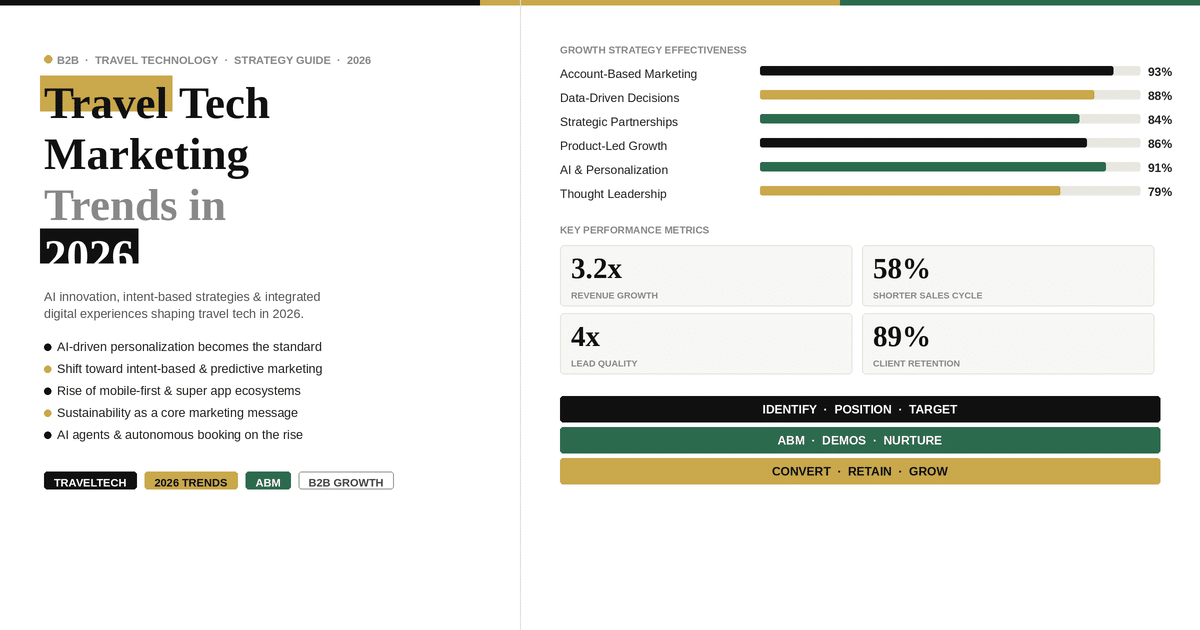
The travel technology industry in 2026 is undergoing a major shift driven by digital maturity, AI innovation, and evolving traveler expectations. For B2B travel tech companies, marketing is no longer about visibility alone. It is about delivering personalized, data-driven, and trust-focused experiences that align with modern buyer behavior.
As competition intensifies across OTAs, platforms, and service providers, staying ahead requires a deep understanding of emerging marketing trends shaping the industry.
AI-Driven Personalization Becomes the Standard
Artificial intelligence is no longer a differentiator. It is becoming the foundation of travel marketing.
In 2026:
- AI-powered engines create personalized travel recommendations
- Chatbots and virtual assistants handle end-to-end customer journeys
- Predictive analytics helps anticipate traveler needs
Travelers now expect highly customized experiences, making personalization a core marketing strategy.
Shift Toward Intent-Based and Predictive Marketing
Traditional targeting methods are losing effectiveness. Travel tech companies are increasingly relying on intent data and behavioral signals.
This enables:
- Identification of high-intent travelers and businesses
- Real-time campaign optimization
- Better alignment with buyer journey stages
As digital signals evolve, marketers must move from reactive campaigns to predictive engagement strategies.
Rise of Mobile-First and Super App Ecosystems
The modern traveler is mobile-first, especially in fast-growing regions like Asia Pacific.
Key trends include:
- Growth of travel super apps integrating bookings, payments, and services
- Increased reliance on mobile platforms for discovery and transactions
- Seamless user journeys across devices
This shift is redefining how travel tech companies design and market their platforms.
Content Marketing Focused on Experience and Trust
In 2026, content is less about promotion and more about storytelling and trust-building.
Effective strategies include:
- Authentic destination storytelling
- User-generated content and influencer collaboration
- Educational content that simplifies decision-making
Trust and credibility are becoming key drivers of conversion in travel marketing.
Growth of Omnichannel and Integrated Marketing
Travel buyers interact across multiple channels before making decisions. As a result, integrated marketing strategies are essential.
Key elements include:
- Consistent messaging across web, mobile, and social
- Integration of direct and partner channels
- Data synchronization across platforms
A unified experience ensures higher engagement and conversion rates.
Sustainability as a Core Marketing Message
Sustainability is no longer optional. It is a major factor influencing travel decisions.
Travel tech companies are:
- Promoting eco-friendly travel options
- Highlighting carbon tracking and green initiatives
- Aligning with conscious travel trends
Sustainable positioning enhances brand value and attracts modern travelers.
Emergence of AI Agents and Autonomous Booking
A major shift in 2026 is the move from search-based to action-based travel planning.
Trends include:
- AI agents handling bookings and itinerary planning
- Automated decision-making in travel recommendations
- Reduced reliance on manual search
This changes how marketing funnels are structured, with less emphasis on discovery and more on automation.
Data-Driven Decision Making Across Marketing
Data is at the core of every successful travel marketing strategy.
Companies are leveraging:
- Customer behavior analytics
- Real-time campaign performance data
- Advanced segmentation and targeting
Data-driven marketing ensures better ROI and more effective resource allocation.
Experience-Led Marketing Over Price Competition
Travelers in 2026 prioritize experiences over cost alone. This shift is influencing how travel tech companies position their offerings.
Marketing now focuses on:
- Unique and immersive travel experiences
- Personal growth and wellness journeys
- Cultural and authentic travel
Experience-led messaging drives stronger emotional engagement and brand loyalty.
B2B Ecosystem and Platform Integration
The travel tech landscape is moving toward interconnected ecosystems.
Key developments include:
- API-driven integrations between platforms
- Collaboration between suppliers and distributors
- Growth of modular and scalable solutions
Marketing strategies must reflect this ecosystem approach by targeting partners as well as end users.
Final Thoughts
Travel tech marketing in 2026 is defined by personalization, data intelligence, and integrated digital experiences. Companies that embrace AI, leverage intent data, and focus on trust and sustainability will be best positioned to grow.
In a rapidly evolving landscape, the ability to adapt marketing strategies to changing traveler behavior and technological advancements will be the key to long-term success.
Leave a Reply