

In the evolving travel and hospitality ecosystem, technology providers and service companies are increasingly focusing on travel agencies and enterprise clients to drive scalable growth. However, targeting these segments requires a strategic B2B approach that goes beyond generic outreach.
Travel agencies and enterprises operate with different priorities, decision-making structures, and operational complexities. Successfully engaging them requires precision targeting, personalized messaging, and a strong understanding of their business needs.
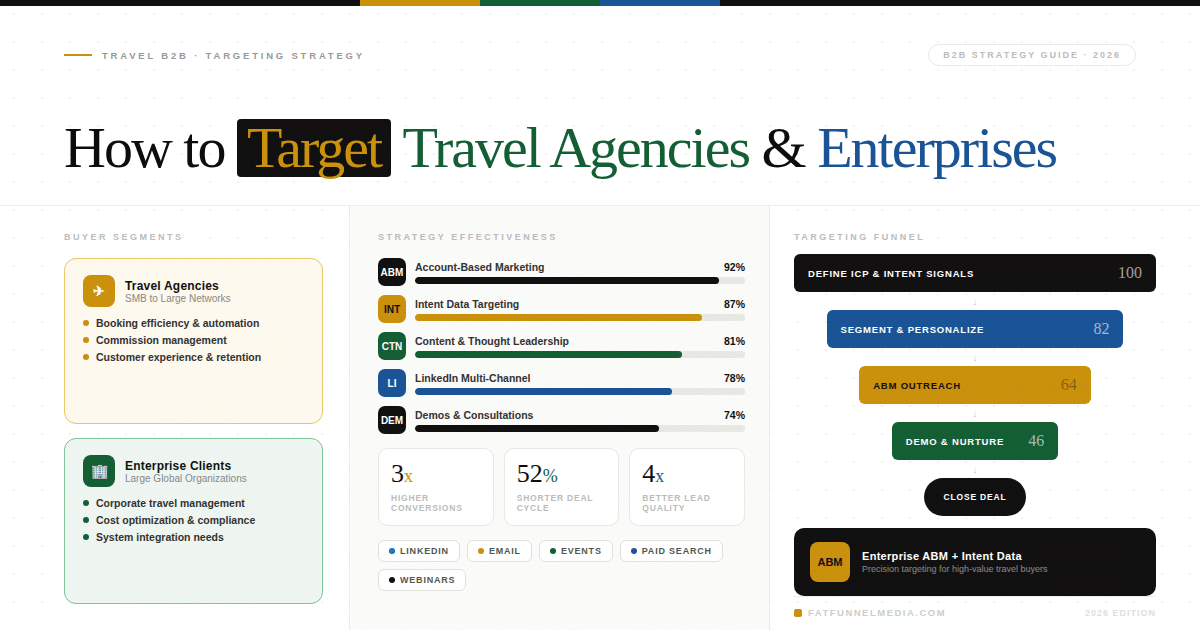
Understanding the Travel Buyer Segments
Travel agencies and enterprise clients are not a uniform audience. Each segment has unique challenges and expectations.
Travel agencies typically focus on:
- Booking efficiency and automation
- Commission management
- Customer experience and retention
Enterprises, on the other hand, prioritize:
- Corporate travel management
- Cost optimization and policy compliance
- Integration with internal systems
Understanding these differences is key to building effective targeting strategies.
Define Separate Ideal Customer Profiles
To effectively target both segments, companies must create distinct Ideal Customer Profiles.
For travel agencies:
- Small to mid-sized agencies or large networks
- Focus on leisure or corporate travel
- Technology adoption level
For enterprises:
- Large organizations with frequent travel needs
- Multiple departments and global presence
- Complex approval and procurement processes
Segmented ICPs allow for more focused and relevant campaigns.
Leverage Intent Data for Better Targeting
Intent data helps identify organizations actively researching travel solutions.
Key signals include:
- Searches related to booking platforms or travel management tools
- Engagement with travel technology content
- Research on corporate travel solutions
Targeting high-intent accounts improves lead quality and conversion rates.
Personalize Messaging for Each Segment
Generic messaging does not resonate in the travel industry. Communication must be tailored based on the audience.
Examples:
- For agencies: improving booking speed and customer satisfaction
- For enterprises: reducing travel costs and ensuring compliance
- Highlighting integration capabilities for both segments
Personalization increases engagement and builds trust.
Use Account-Based Marketing for Enterprise Clients
Enterprise deals require a highly targeted approach. Account-Based Marketing enables companies to engage specific organizations with precision.
Strategies include:
- Targeting high-value enterprise accounts
- Engaging multiple stakeholders within organizations
- Delivering tailored content and demos
ABM improves conversion rates and deal size.
Invest in Content Marketing and Thought Leadership
Content plays a critical role in building credibility in the travel space.
Effective content strategies include:
- Case studies showcasing operational improvements
- Blogs on travel trends and challenges
- Whitepapers on corporate travel management
- Webinars addressing industry insights
Thought leadership attracts decision-makers and builds trust.
Optimize Multi-Channel Outreach
Travel buyers engage across multiple platforms before making decisions. A strong multi-channel strategy ensures consistent visibility.
Effective channels include:
- LinkedIn for B2B outreach
- Email campaigns for nurturing
- Paid search for high-intent queries
- Industry events and webinars
Consistency across channels enhances engagement.
Offer Demos and Tailored Solutions
Travel agencies and enterprises prefer solutions that are tailored to their needs. Offering demos and consultations helps showcase value.
Benefits include:
- Demonstrating real-world use cases
- Addressing specific business challenges
- Building confidence in the solution
This approach improves conversion rates.
Build Strategic Partnerships
Partnerships can expand reach and enhance credibility.
Potential partnerships include:
- Airlines and hotel chains
- Travel management companies
- Technology integrators
- Industry associations
These collaborations open new opportunities and strengthen positioning.
Align Sales and Marketing Teams
Effective targeting requires strong collaboration between sales and marketing.
Best practices include:
- Sharing account insights and data
- Coordinating outreach strategies
- Maintaining consistent messaging
Alignment ensures a seamless buyer journey.
Measure and Optimize Campaign Performance
Continuous optimization is essential for success.
Key metrics to track:
- Engagement levels
- Conversion rates
- Pipeline contribution
- Customer acquisition cost
Data-driven insights help refine strategies and improve ROI.
Final Thoughts
Targeting travel agencies and enterprises requires a structured and strategic B2B approach. By combining intent data, personalization, and multi-channel engagement, companies can effectively connect with high-value prospects and drive meaningful conversions.
In a competitive travel market, the ability to deliver relevant and value-driven messaging can be the key to long-term growth and success.
Leave a Reply