

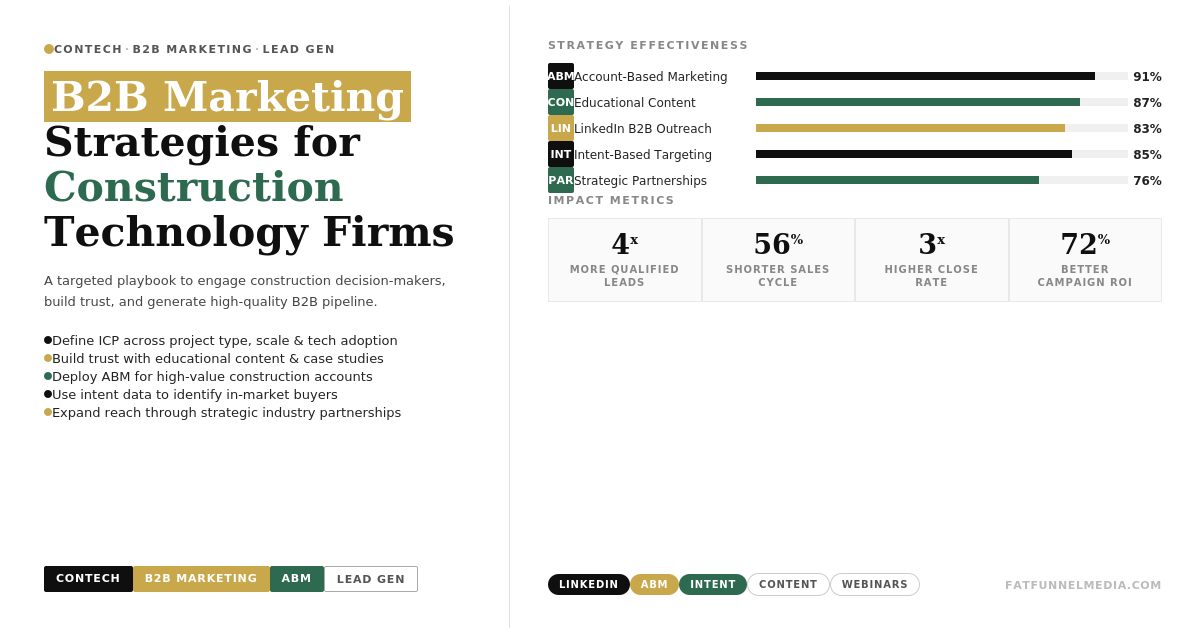
The construction technology sector is undergoing a major transformation as digital solutions reshape how projects are planned, executed, and managed. From project management platforms to IoT-enabled equipment and AI-driven analytics, ConTech firms are driving efficiency and innovation across the industry.
However, marketing these solutions in a B2B environment comes with unique challenges. Long sales cycles, traditional mindsets, and multiple decision-makers make it difficult to generate and convert high-quality leads. To succeed, construction technology firms must adopt targeted and data-driven marketing strategies.
Understand the Construction Buyer Ecosystem
Construction technology buyers are not a single persona. Decisions often involve a mix of stakeholders including project managers, contractors, procurement teams, and executives.
Key characteristics:
- Risk-averse decision-making
- Strong focus on ROI and operational efficiency
- Preference for proven and reliable solutions
- Long evaluation and approval cycles
Understanding this ecosystem is critical to crafting effective marketing strategies.
Define a Clear Ideal Customer Profile
A focused approach begins with identifying the right audience. Construction technology firms should define their Ideal Customer Profile based on:
- Type of projects such as residential, commercial, or infrastructure
- Company size and project scale
- Technology adoption level
- Specific operational challenges
A well-defined ICP ensures marketing efforts are aligned with high-value prospects.
Invest in Educational and Value-Driven Content
Content marketing plays a vital role in building trust in the construction industry. Buyers prefer solutions that demonstrate real-world impact.
Effective content formats include:
- Case studies showcasing project efficiency and cost savings
- Whitepapers on digital transformation in construction
- Blogs addressing industry challenges
- Video demonstrations of solutions in action
Educational content positions your brand as a trusted partner.
Leverage Account-Based Marketing for High-Value Deals
Construction projects often involve large contracts and long-term commitments. Account-Based Marketing helps target high-value companies with personalized campaigns.
Strategies include:
- Identifying key accounts in construction and infrastructure
- Creating tailored messaging for each account
- Engaging multiple stakeholders within the organization
ABM increases relevance and improves conversion rates.
Use LinkedIn for Targeted B2B Outreach
LinkedIn is a powerful platform for reaching decision-makers in the construction industry.
Effective strategies:
- Connecting with project managers and executives
- Sharing industry insights and success stories
- Running targeted ad campaigns
- Engaging in relevant groups and discussions
Consistent activity helps build visibility and credibility.
Optimize Website for Lead Conversion
Your website is a key touchpoint in the buyer journey. It should be designed to convert visitors into qualified leads.
Important elements include:
- Clear value proposition
- Industry-specific landing pages
- Strong calls to action
- Simple and intuitive forms
Adding tools like project ROI calculators can increase engagement.
Leverage Intent Data for Better Targeting
Intent data helps identify companies actively researching construction technology solutions.
Key signals include:
- Searches related to project management software
- Engagement with ConTech content
- Research on digital construction tools
Targeting high-intent accounts improves lead quality and reduces wasted effort.
Build Strategic Industry Partnerships
Partnerships can significantly enhance market reach and credibility.
Construction technology firms can collaborate with:
- Contractors and builders
- Engineering and consulting firms
- Industry associations
- Equipment providers
These partnerships open new demand channels and strengthen brand positioning.
Implement Multi-Channel Marketing Campaigns
B2B buyers interact across multiple platforms before making decisions. A multi-channel strategy ensures consistent engagement.
Effective channels include:
- Email marketing for nurturing leads
- Paid ads for quick visibility
- Webinars focused on industry challenges
- Events and trade shows
Consistency across channels builds trust and awareness.
Align Sales and Marketing Teams
Successful B2B marketing requires close collaboration between sales and marketing.
Best practices:
- Sharing account insights and data
- Coordinating outreach strategies
- Maintaining consistent messaging
Alignment ensures a seamless experience for prospects.
Measure and Optimize Campaign Performance
Continuous improvement is essential for long-term success.
Key metrics to track:
- Lead quality and conversion rates
- Cost per lead
- Pipeline contribution
- Revenue impact
Data-driven insights help refine strategies and improve ROI.
Final Thoughts
B2B marketing for construction technology firms requires a strategic blend of targeting, education, and engagement. By focusing on the right audience and delivering value-driven messaging, companies can build trust and drive high-quality leads.
In an industry that values reliability and results, the ability to communicate impact effectively can set ConTech firms apart and accelerate growth.
Leave a Reply