
In a rapidly digitizing hospitality industry, restaurant software providers are facing increasing competition to capture attention and drive qualified demand. From POS systems to inventory management and customer engagement platforms, the market is crowded with solutions promising efficiency and growth.
For B2B restaurant software companies, demand generation is no longer about volume. It is about attracting the right decision-makers, educating them, and converting them into long-term clients.
Understanding the Restaurant Buyer Landscape
Restaurant owners and operators operate in a fast-paced environment where margins are tight and decisions are often driven by immediate operational needs.
Key characteristics of buyers:
- Focus on cost efficiency and ROI
- Preference for easy-to-use solutions
- Limited time for long evaluation processes
- High reliance on peer recommendations
Understanding these factors is critical to building an effective demand generation strategy.
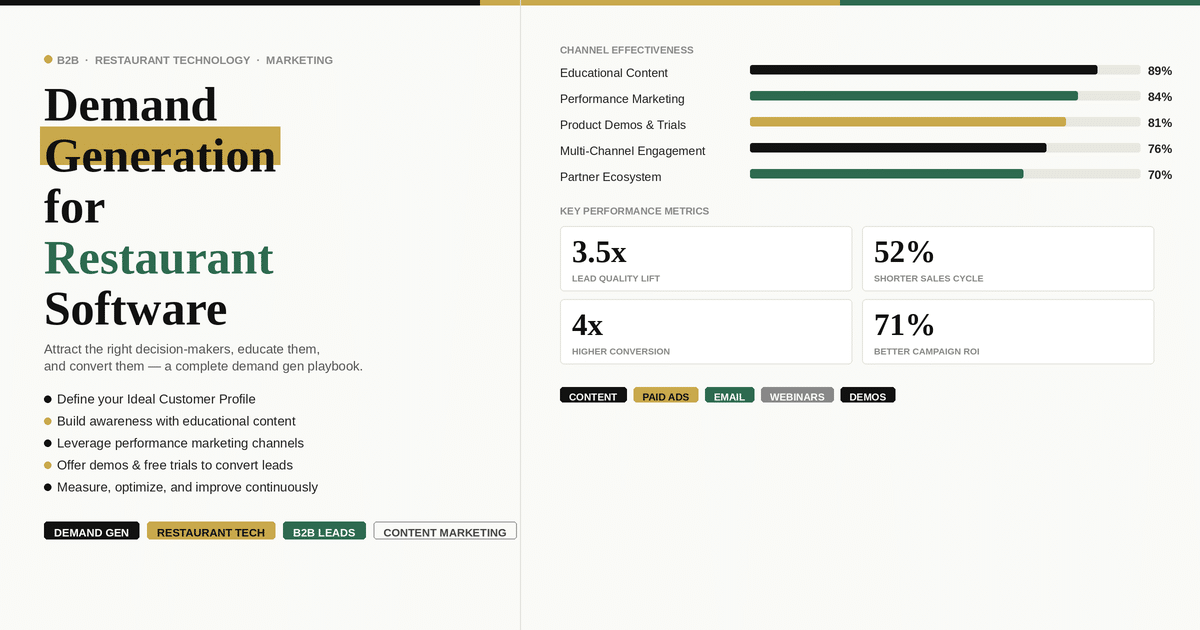
Define Your Ideal Customer Profile
Successful demand generation begins with identifying who you want to target. Restaurant software providers should segment their audience based on:
- Type of restaurant such as QSR, fine dining, or cloud kitchens
- Number of locations
- Technology adoption level
- Operational challenges
A well-defined ICP helps create more targeted and effective campaigns.
Build Awareness Through Educational Content
Content plays a key role in attracting potential buyers who are actively looking to improve their operations.
Effective content formats include:
- Blogs on reducing operational costs
- Guides on improving customer experience
- Case studies showcasing real results
- Videos demonstrating product features
Educational content positions your brand as a trusted advisor rather than just a vendor.
Leverage Performance Marketing for Quick Reach
Paid campaigns can accelerate demand generation by reaching the right audience at the right time.
Key channels include:
- Google Ads targeting high-intent keywords
- Social media ads focusing on restaurant owners
- Retargeting campaigns to re-engage visitors
Performance marketing ensures visibility among prospects who are already searching for solutions.
Use Localized and Industry-Specific Messaging
Restaurant businesses often operate within specific regions and customer segments. Messaging should reflect this context.
Examples:
- Highlighting compliance with local regulations
- Addressing region-specific challenges
- Showcasing success stories from similar businesses
Localized messaging increases relevance and trust.
Offer Product Demos and Free Trials
Restaurant operators prefer to see how a solution works before committing. Offering demos or free trials can significantly improve conversion rates.
Benefits include:
- Demonstrating real-time functionality
- Reducing hesitation
- Building confidence in the product
This approach helps attract serious and high-quality leads.
Strengthen Multi-Channel Engagement
A strong demand generation strategy involves engaging prospects across multiple touchpoints.
Effective channels include:
- Email campaigns for nurturing leads
- LinkedIn and Facebook for outreach
- Webinars focused on operational challenges
- SMS or WhatsApp for quick communication
Consistency across channels keeps your brand top of mind.
Build Partnerships Within the Ecosystem
Collaborating with industry players can open new demand channels.
Potential partners:
- Food delivery platforms
- Payment solution providers
- Restaurant consultants
- Industry associations
Partnerships enhance credibility and expand reach.
Optimize Conversion with a Strong Funnel
Attracting leads is only the first step. Converting them requires a well-structured funnel.
Key elements:
- Clear landing pages with strong value propositions
- Simple sign-up processes
- Timely follow-ups from sales teams
A streamlined funnel ensures higher conversion rates.
Measure and Improve Continuously
Demand generation efforts must be backed by data to ensure effectiveness.
Track key metrics such as:
- Cost per lead
- Conversion rates
- Customer acquisition cost
- Lifetime value of clients
Continuous optimization helps improve ROI and campaign performance.
Final Thoughts
Demand generation for restaurant software solutions requires a balance of education, targeting, and engagement. By focusing on the right audience, delivering value-driven messaging, and leveraging multiple channels, companies can attract high-quality leads and drive sustainable growth.
In a competitive hospitality market, the ability to generate and convert demand effectively can define long-term success.
Leave a Reply